
IT Support for Engineering Design & Precision CNC Manufacturing

Whether You’re Manufacturing Aerospace Components or Designing Industrial Systems – Your IT should Match Your Precision Standards.

When your DMG Mori 5-axis mill can’t receive CAM files because the network is down, production stops. When your engineering team’s SolidWorks simulation crashes mid-render, hours of design work are lost. When your IT provider accepts recurring issues without investigating root cause, you’re managing IT complexity on top of running a precision manufacturing or engineering design business.


We’re problem-solvers who match your engineering mindset. When something fails repeatedly, we investigate root cause – we don’t accept “it just does that.”

You’re engineers. You investigate root cause. You expect the same from your IT provider.


But you’re the one left to figure it all out.

You’re Running Aerospace-Grade Engineering on Consumer-Grade IT

You’re running a precision engineering business. CNC machines, CAD/CAM systems, aerospace contracts, defence work. Every micron matters. Your clients demand Cyber Essentials certification. Your tolerances are measured in thousandths of a millimetre.


But your IT? It’s the one part of your operation that doesn’t meet your own standards.


The aerospace contract you’ve held for five years? They now require Cyber Essentials Plus within 90 days – or they’ll find a supplier who has it. The Formula 1 team sending you CAD files? They’re asking how you protect their IP, who has access, how you segment networks.

You’re being evaluated as a potential weak link in their security.

50% of UK businesses experienced cyber breaches in 2024 – many happened because of supply chain compromises. When St James’s Place required their 2,800 suppliers to certify to Cyber Essentials Plus, they saw 80% reduction in security incidents.

Can you prove you’re not the weak link?

Because your current IT provider hasn’t figured out secure network segmentation, your team is still using a USB and physically walking G-code files from the design office to the shop floor.

Which version is current?

Who knows.

It’s a version control nightmare that wastes time and creates risk.

Scanner fails every Tuesday morning? “It just does that.” Network slows down when engineers are rendering complex assemblies in SolidWorks? “Have you tried restarting?” They lack the curiosity and problem-solving drive you’d expect from anyone working with engineering firms.


Or maybe you’re an engineering design consultancy. Your team runs complex simulations and multi-physics analysis for industrial clients. Your workstations need HPC infrastructure to handle these computational loads, but your IT provider treats you like a standard office with email and spreadsheets. They don’t understand why rendering a 10,000-component assembly or running thermal analysis simulations demands different infrastructure than processing invoices.

You’re juggling operations, quality control, winning aerospace contracts. Your Mazak lathe runs on Fanuc controls from 2003, or your engineering workstations run cutting-edge simulation software that demands serious computational power. Your newest DMG Mori machine needs network access but can’t be on the same segment as your business systems.


And you’re the one figuring this out – because your current provider doesn’t understand precision manufacturing IT well enough to offer solutions.

Your engineering processes are cutting-edge. Your IT feels 10 years behind. You know you need to modernise – network segmentation for legacy machines, proper backup and version control, certified workstations that don’t lag during CAD rendering, Cyber Essentials certification to keep winning contracts.


But where do you even start?

Why Engineering Firms Are Different

Precision Manufacturing IT Isn’t Office IT


Generic IT providers treat your engineering firm like any other office based company. They don’t understand the difference.

We know you’re unique, click to find out more:

When you machine components for Rolls Royce or BAE Systems, or create technical specifications for automotive OEMs, you’re handling their intellectual property, proprietary designs, competitive advantage.

Larger clients are now vetting their suppliers’ cyber security.

A security breach at your firm compromises client IP and damages the professional trust your business is built on.

This is why supply chain security is now a competitive requirement, not just an IT concern.

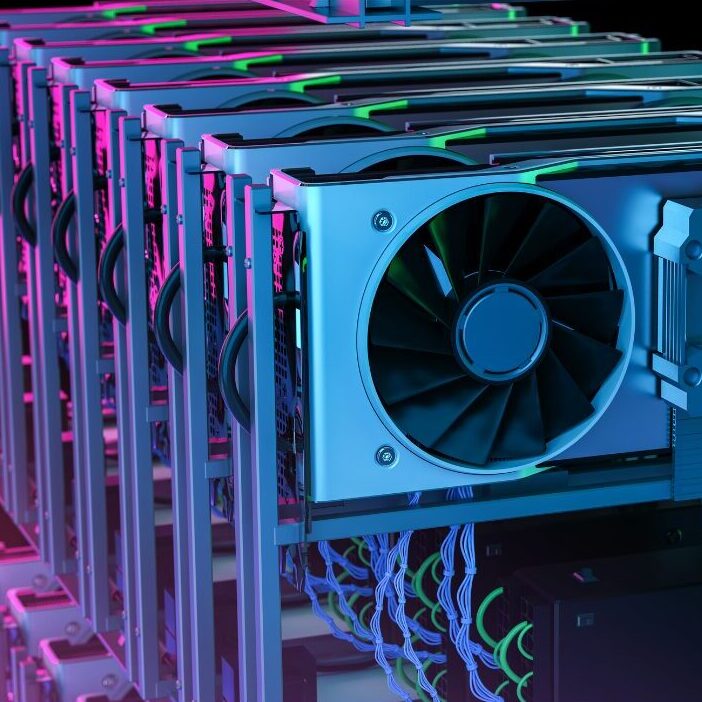
Engineering firms need High Performance Computing (HPC) infrastructure to run CAD/CAM software effectively – standard office PCs simply can’t handle the computational demands of rendering complex assemblies and running simulations.

They need NVIDIA RTX (formerly Quadro) or AMD Radeon Pro workstation GPUs – not gaming cards. SolidWorks and Autodesk certify specific professional graphics cards. Use a non-certified card and the software provider often refuses support.


Because in precision engineering, a single pixel calculated incorrectly could represent a 0.001mm measurement error that ruins a £5,000 titanium part.

Fanuc-controlled mills on Windows XP. Machines with floppy disk readers. They can’t be patched, but they need network access to receive CAM files.

Most IT providers either refuse to touch legacy equipment or connect it unsafely. You need network segmentation that keeps these machines productive while maintaining Cyber Essentials compliance.

Your CNC machines can’t wait for slow networks or system crashes – and neither can your engineering team’s design deadlines.

For manufacturers, spindle time is the only time you make money. For design firms, billable hours depend on engineers working, not waiting.

When your Haas mill can’t receive a toolpath from Mastercam, production stops. When engineers wait for SolidWorks assemblies to render or simulations to complete, they’re not designing – they’re watching progress bars.


Your IT infrastructure is as mission-critical as your machine tools.

Before sending a program to a DMG Mori machine, your engineers simulate it in Vericut. If there’s code error, the spindle crashes – tens of thousands in repairs, weeks of downtime. This simulation demands GPU power standard office PCs can’t deliver.

Render time shouldn’t delay spindle time.

The Lumina Difference

We’re Engineers by Mindset

When something fails repeatedly, we investigate root cause. We don’t accept “it just does that.” We don’t close tickets without solving problems.

You hold your engineering work to aerospace standards. We hold our IT work to the same standard of precision.

Our Engineering-Specific Services

When you machine components for Rolls Royce, design industrial systems for BAE Systems, or create technical specifications for Formula 1 teams, you’re handling their intellectual property and competitive secrets. You’re being evaluated as a potential weak link in their security.

The challenge: Hackers and scammers target smaller suppliers as backdoors into larger, more secure organisations. Your aerospace client knows this – which is why they’re now vetting your cyber security practices before awarding contracts.

The 90-day ultimatum scenario: Your client calls: “We need you Cyber Essentials Plus certified within 90 days, or we’re pulling the contract.” If your security isn’t already mature, 90 days might not be enough.

What we implement:

Client IP Protection: Separate, secure storage for client CAD files, technical specifications, and proprietary designs. Access controls, encryption, and audit logging that demonstrates to clients you protect their IP as securely as your own.

Network Segmentation: Shop floor machines handling sensitive aerospace components remain isolated from general business systems – reducing risk if one area is compromised.

Rapid Certification: When clients demand Cyber Essentials on short notice, we can accelerate implementation. Better: we build infrastructure that’s certification-ready from the start, so urgent demands don’t trigger crisis mode.

Audit-Ready Documentation: When your Tier 1 client requests security audit evidence – network diagrams, policies, access logs – you’re ready with professional, comprehensive responses.

The reality: St James’s Place required 2,800 suppliers to certify to Cyber Essentials Plus and saw 80% reduction in security incidents. Your position in the supply chain means your security directly impacts your clients’ security.

The goal: Position as a secure, trusted link in high-value supply chains – not a vulnerability that needs managing.

The applications you use like SolidWorks or Mastercam demand High Performance Computing (HPC) infrastructure – not standard office PCs. Rendering complex assemblies, running simulations, and generating toolpaths require serious computational power.

Certified HPC Workstations: NVIDIA RTX or AMD Radeon Pro graphics cards certified by SolidWorks and Autodesk. ECC (Error Correction Code) memory and driver certification. If your software glitches on a non-certified card, the vendor refuses support.

GPU Performance: 8-16GB VRAM and serious compute power for rendering complex assemblies – jet engine turbines with thousands of components. Your engineers can rotate, zoom, and manipulate designs in real-time.

Network Performance: CAD assemblies and CAM toolpaths can be gigabytes. We design networks that transfer these files quickly between design office and shop floor.

Simulation Performance: Running Vericut simulations to prevent machine crashes demands computational power. We ensure workstations run digital twins at full frame rate – because missing a collision in simulation means potential £20k+ damage to machine tools.

Storage & IP Protection: Your CAD files and G-code represent thousands of hours of engineering work. We implement versioned backups with rapid recovery – because accidentally running an old version of a part file and ruining a £5,000 block of titanium is expensive.

The goal: Engineers working at full productivity, not waiting for computers to catch up.

Many precision engineering firms run CNC machines from the 1990s and early 2000s – Windows XP, Windows 7, or DOS. They can’t be patched without breaking the controller software, but they need network access to receive CAM files.

The challenge: Connecting unsupported operating systems to your business network creates security vulnerabilities that fail Cyber Essentials certification.

How we solve it:

Network Segmentation: We create isolated network segments for legacy CNC machines. Your Fanuc-controlled mills and Mazak lathes can receive G-code files from the design office, but they’re separated from your business systems, email, and internet access.

Secure File Transfer: DNC networking or secure file transfer systems move CAM files from design workstations to shop floor machines without having to walk a USB stick down there. Version control is maintained – you know which G-code is current.

Industrial Control System Support: Whether your machines run Fanuc, Siemens, Heidenhain, or other industrial controls, we understand the networking requirements and limitations. We don’t force modern IT security practices onto equipment that can’t support them – we design around the constraints intelligently.

Cyber Essentials Compliance: Having old machines doesn’t disqualify you from certification – improper network design does. We create networks that pass certification requirements while keeping your legacy equipment productive.

The goal: Your legacy machines keep making money without compromising your security posture or contract eligibility.


 Cyber Essentials has become the entry ticket for aerospace, defence, and government contracts. It proves you meet baseline security standards. But certification is just the beginning – true supply chain security requires protecting client IP, managing third-party risk, and proving you’re not a weak link.

What certification requires:

Five essential controls: firewalls, secure configuration, access control, malware protection, and security update management. The challenge: your shop floor has legacy machines that can’t be patched, CAD workstations needing admin access, and engineers who install software for new projects.

How we deliver 100% success rate:

Assessment & Implementation: We audit your current security, identify gaps, and implement required controls without disrupting production. Network segmentation for legacy machines. Firewalls that don’t slow CAD rendering. Malware protection configured for engineering environments.

Documentation: We prepare the evidence, screenshots, and network diagrams assessors need to verify compliance – no surprises during assessment.

Support Through Certification: Whether basic Cyber Essentials or Cyber Essentials Plus (hands-on technical audit), we guide you through external assessment.

Beyond the Certificate: The certificate opens doors to contracts. The actual security protects your intellectual property, client designs, and supply chain position.

We have a 100% Cyber Essentials success rate – every client we’ve guided through certification has achieved it, because we prepare properly and understand what assessors look for.

The goal: Certification achieved without production disruption, maintained without constant effort, backed by security that actually protects what matters.

Your CAD files, G-code, toolpaths, and manufacturing processes represent years of engineering development and millions in IP value. Losing this data – through hardware failure, ransomware, or theft – doesn’t just disrupt operations. It destroys competitive advantage.

How we protect your most valuable assets:

Versioned Backup Systems: We implement backup systems that preserve version history – so if someone needs to revert to last week’s design or recover a deleted component, it’s available immediately. This isn’t just disaster recovery – it’s production accuracy and quality control.

Rapid Recovery Capability: If a workstation fails or becomes infected with ransomware, your engineer can’t lose days waiting for data recovery. We design backup systems with rapid restore capability – often getting engineers back to work within hours.

Protection Against Ransomware: Manufacturing is a prime target because production downtime is expensive (thousands of pounds per hour). We implement network segmentation, endpoint protection, and offline backup copies that ransomware can’t encrypt.

Client IP Confidentiality: When aerospace or defence clients send proprietary designs, you’re responsible for protecting their IP as securely as your own. We implement access controls, encrypted storage, and audit logging that demonstrates to clients you take their confidentiality seriously.

The goal: Your intellectual property and your clients’ confidential data protected with the same precision you apply to manufacturing.

Many engineering firm owners are in their 50s or 60s, thinking about exit – whether that’s selling the business, transitioning to new leadership, or preparing for retirement.

Is this you?

Well, proper IT infrastructure significantly increases business valuation. Prospective buyers look for “clean” systems, not undocumented networks, legacy machines held together with hope, and tribal knowledge that disappears when key people leave.

How we help you build exit-ready IT:

Documentation That Outlasts Individuals: We document your network architecture, system configurations, software licenses, vendor relationships, and support procedures. This knowledge doesn’t live in one person’s head.

Infrastructure That Scales: Buyers want to see IT systems that can support growth, not systems that barely handle current operations. We build infrastructure with headroom.

Compliance & Certification Maintained: Cyber Essentials certification, GDPR compliance, and industry-specific security measures demonstrate to buyers that the business is professionally managed and contract-ready.

Reducing Owner Dependency: If the business relies on the owner being the “IT person who knows how everything works,” it’s less attractive to buyers. We take that burden off you.

The goal: IT infrastructure that adds value to your business and makes transition straightforward rather than chaotic.

How Lumina’s PRISM Service Works for CNC Firms

Core Tier

Where Most Engineering Firms Start

This is where Cyber Essentials certification happens. Proper network segmentation for legacy machines. Dedicated account manager. Quarterly strategic reviews. Your IT managed professionally, not reactively.

Premium Tier

Where Growing Firms Move

Cyber Essentials Plus certification (the higher technical audit level that aerospace and defence clients increasingly require). Advanced security measures. Proactive infrastructure management. Technology roadmapping aligned with business growth.

Enterprise Tier

Strategic IT Partnership

CEO-level quarterly reviews with Richard (our CEO and Head of Technology). Technology strategy aligned with business exit preparation or major growth initiatives. White-glove service where your account team knows your shop floor as well as your office.

Related Services for Engineering Firms

Complete IT Support Design Engineering & Precision CNC Manufacturing

Complete your engine and shield with Lumina:

Cyber Security Services

Beyond Cyber Essentials, comprehensive security measures protect your shop floor, design office, and client confidentiality.

Human Risk Management

Security training for your team that addresses manufacturing-specific threats – because engineers need different training than office staff.

Strategic Technology Planning

Multi-year IT roadmaps aligned with your business growth, contract requirements, and potential exit strategy.

Ready for IT That Matches Your Engineering Standards?

Stop accepting IT providers who don’t understand precision manufacturing. Partner with specialists who speak your language and solve your actual problems.


Discuss your business needs today

Get in touch Schedule a call